Data is everywhere. From the websites we visit to the products we buy, everything we do generates data. And with the rise of the internet and digital technologies, the amount of data being produced every day is growing exponentially. But what exactly is data, How does it work?
In this blog post, we’ll explore what data is, how it works, and why it’s important. We’ll look at the different types of data, how it’s collected and analyzed, and the ways in which data is transforming industries and shaping our world. Whether you’re a data scientist, a business owner, or simply someone who’s curious about the world, this post will give you a deeper understanding of how data works and the impact it can have.
Data Servers
When you post an image on Instagram or Facebook or any other social media. The image is uploaded to their servers and stored in their databases. Even if you delete the image from your account, it may still exist on their servers for some period of time.
The exact amount of time that the image is stored on the server after you delete it can vary depending on the platform’s policies and technical infrastructure. Generally, social media platforms will keep backups of user data for a period of time, in case of data loss or other issues. However, they may also periodically purge older data to make room for new data.
To manage the vast amount of data that is uploaded to their platforms every day, social media companies use sophisticated data storage systems and technologies such as cloud storage, distributed databases, and content delivery networks. These systems allow them to store and retrieve massive amounts of data quickly and efficiently, while also ensuring data security and reliability.
Types of Data Storage
Cloud storage
Social media companies use cloud storage services to store user data. Cloud storage allows them to store and access large amounts of data from remote servers, which are maintained and managed by third-party providers like Amazon Web Services, Microsoft Azure, or Google Cloud Platform. These cloud services use redundant storage systems to ensure that data is not lost in case of hardware failures or disasters.
Distributed databases
Social media companies also use distributed databases to manage user data. Distributed databases are designed to handle large amounts of data by splitting it into smaller pieces and storing them on multiple servers. This allows for faster data retrieval and ensures that data is available even if some servers fail.
CDN
Social media platforms use CDNs (Content delivery networks) to deliver content to users quickly and efficiently. CDNs are a network of servers distributed around the world that store copies of data, such as images, videos, and other media, closer to the user. This allows for faster content delivery and reduces server load.
Blockchain
Blockchain is a decentralized, distributed ledger that records transactions on multiple computers or nodes. Each block in the chain contains a unique cryptographic hash of the previous block, which creates an unbreakable chain of records. This means that once data is added to the blockchain, it cannot be altered or deleted.
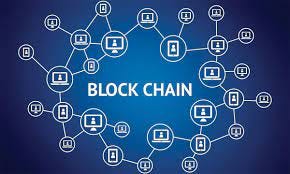
Because of its security and immutability, blockchain technology is being explored for a variety of applications beyond cryptocurrency, including data storage and management. Companies are exploring the use of blockchain to store and manage data in a more secure and transparent way, as well as to enable secure sharing and collaboration of data between parties without the need for intermediaries.
- In data storage and management, blockchain technology has the potential to improve data security and transparency. By storing data in a decentralized, tamper-proof ledger, blockchain can reduce the risk of data breaches and hacking, as well as provide a transparent record of data transactions.
- Blockchain technology can also be used for supply chain management, where it can provide a transparent and secure record of the movement of goods and services. This can help to improve supply chain efficiency and reduce the risk of fraud or counterfeiting.
Quantum Computing
Another emerging technology for data storage is “quantum computing.” Quantum computing is a type of computing that uses quantum bits, or “qubits,” instead of classical bits to process information. This technology has the potential to process and store data much faster than traditional computing, which could have significant implications for data storage and management.

One of the main applications of quantum computing is in cryptography and data security. Quantum computers can break many of the existing encryption methods used to secure data, which has led to a race to develop new quantum-resistant encryption methods.
- Quantum computing can also be used for complex simulations and modeling, such as in the field of drug discovery. Quantum computers can perform calculations that are beyond the reach of classical computers, which could help to accelerate the development of new drugs and treatments.
- In the future, quantum computing could also have significant implications for fields such as artificial intelligence and machine learning. Quantum computers could help to accelerate the development of more powerful and efficient algorithms, which could lead to breakthroughs in areas such as natural language processing, image recognition, and more.
quantum computing is still in its early stages, and there are significant technical and engineering challenges that need to be overcome to make it practical for real-world applications. These challenges include developing better qubit designs, improving error correction, and reducing the cost and complexity of quantum computers.
Better data management and analysis
Quantum computers could also help to improve data management and analysis, which could reduce the amount of virtual data pollution caused by incorrect or incomplete data. For example, quantum computers could help to identify patterns and correlations in data that are difficult or impossible for classical computers to detect, leading to better data-driven decision making.
Efficient algorithms
Quantum computers could potentially help to develop more efficient algorithms for data processing and analysis. These algorithms could help to reduce the amount of virtual data pollution caused by redundant or unnecessary data, as well as improve the accuracy of data analysis.
Improved security and encryption
Quantum computers could help to improve data security and encryption, which could reduce the risk of data breaches and cyber-attacks. By using quantum-resistant encryption methods, virtual data pollution caused by security breaches could be reduced.
In the digital era data could manipulate our emotions and decisions, Secure your personal data.
Here VK💜..




No comments:
Post a Comment